 |
 |
 |
 |
 |
||
 |
 |
 |
 |
 |
 |
 |
 |
| |
Check out which planets are currently up in the sky with the AAG SkyViewer
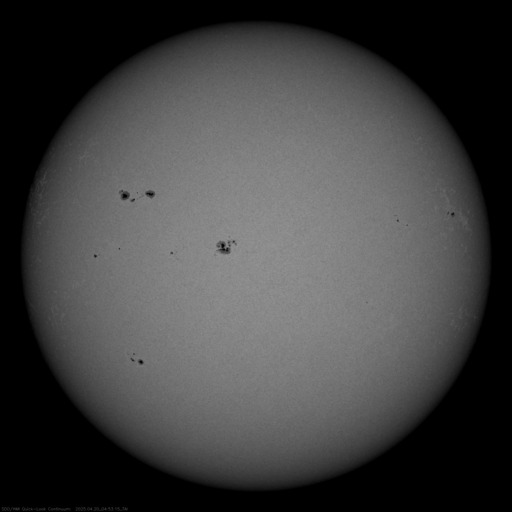
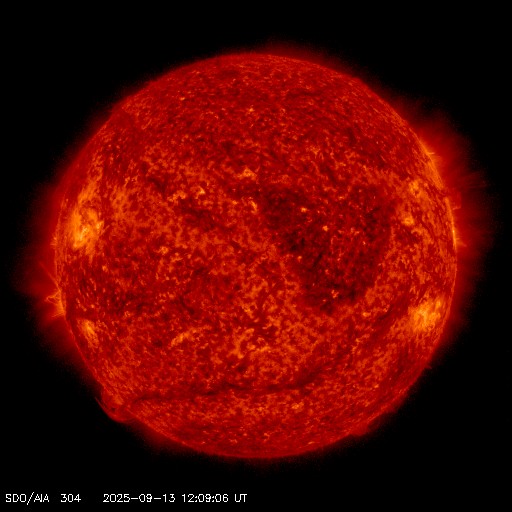
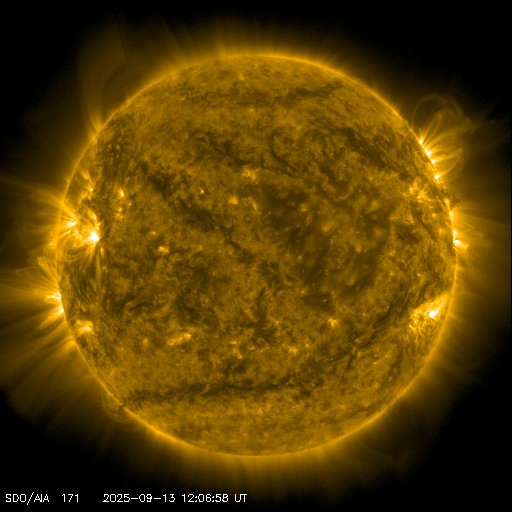
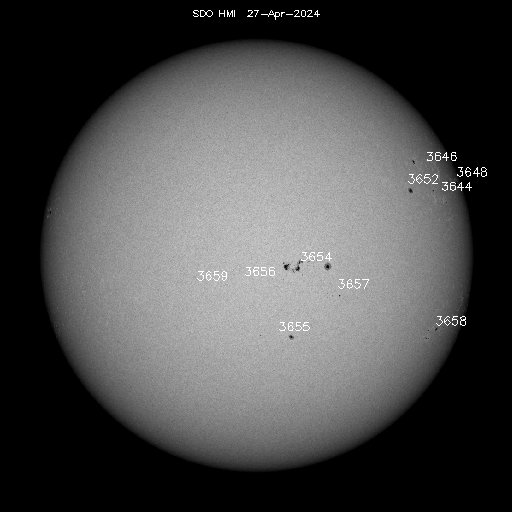
Latest images of the Sun from the SDO spacecraft (HMII, 3040 and 171 Angstroms)
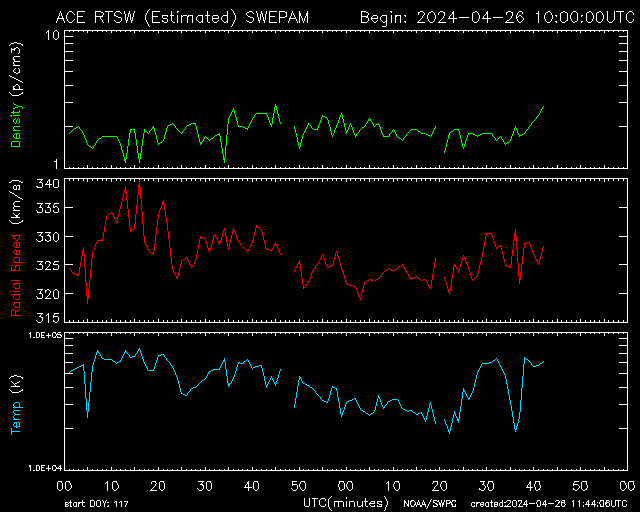
Real-time solar wind data from NASA/ACE spacecraft
 | ||
| Solar X-rays (X-ray flux): Geomagnetic Field (Kp): |
|
| Sunspot Activity
|
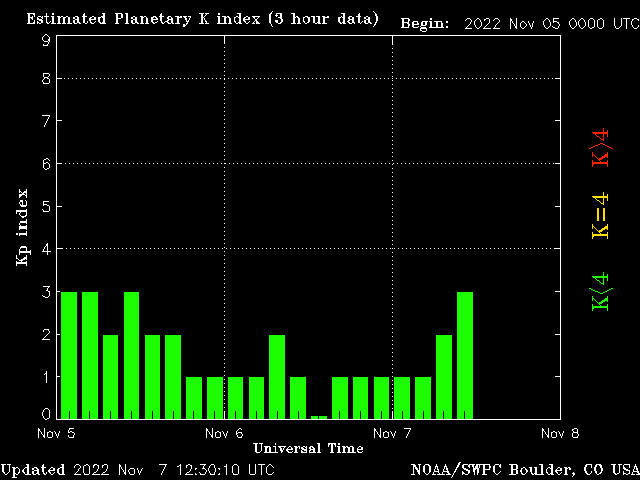
 Planetary 'Kp' Index
|
 Amateur Radio Data
|
|
The Sun was born about 4.6 billion years ago from the gravitational collapse of a vast cloud of gas and dust. Material in the center of the cloud was squeezed so tightly that it became hot enough to ignite nuclear fusion.
NASA has a really cool (hot?) mission exploring the near-Sun environment. Learn More here....
Solar eruptions can be received with a shortwave radio near 20 MHz and often turn on rapidly and decay slowly. These bursts can be quite strong and often last for tens of seconds. You will hear the weak galactic background noise for several seconds, followed by a Solar radio noise burst.
NEW !!
View additional live images of the Sun from the SOHO spacecraft.
View additional high-resolution live images of the Sun from the SDO spacecraft.
Coronal Mass Ejections (CME's) from the Sun can expel particles equivalent to Earth's mass in a few hours. These events can trigger communication outages on Earth and lead to the aurora borealis.
Prominences are relatively cool clouds of gas suspended above the Sun and controlled by magnetic forces. NASA's STEREO spacecraft observed this visually stunning prominence eruption of ionized helium at about 60,000 degrees.

The trend chart hosted by the AAG is updated on a monthly basis.
|
Mercury's surface closely resembles the Moon's. It's covered by impact craters, ancient lava flows, and quake fault lines. Mile-high cliffs stretch for hundreds of miles across the planet's surface.
NASA currently has a mission to Mercury. Keep up with all the updates here!
Images of Mercury can be seen here.
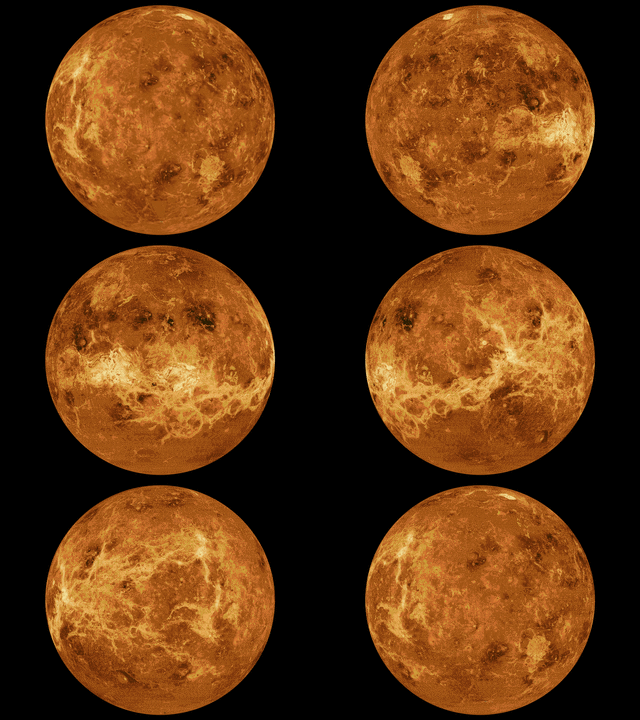
Cloud-covered Venus is the second planet from the Sun, and passes closer to Earth than any other planet. Even so, Venus remained shrouded in mystery until the Space Age because the clouds hide its surface from view.
The European Space Agency (ESA) currently has a mission to Venus. Keep up with all the updates here!
Images of Venus can be seen here.
Venus ocassionally transits the disk of the Sun. Learn more about Venus transits at:
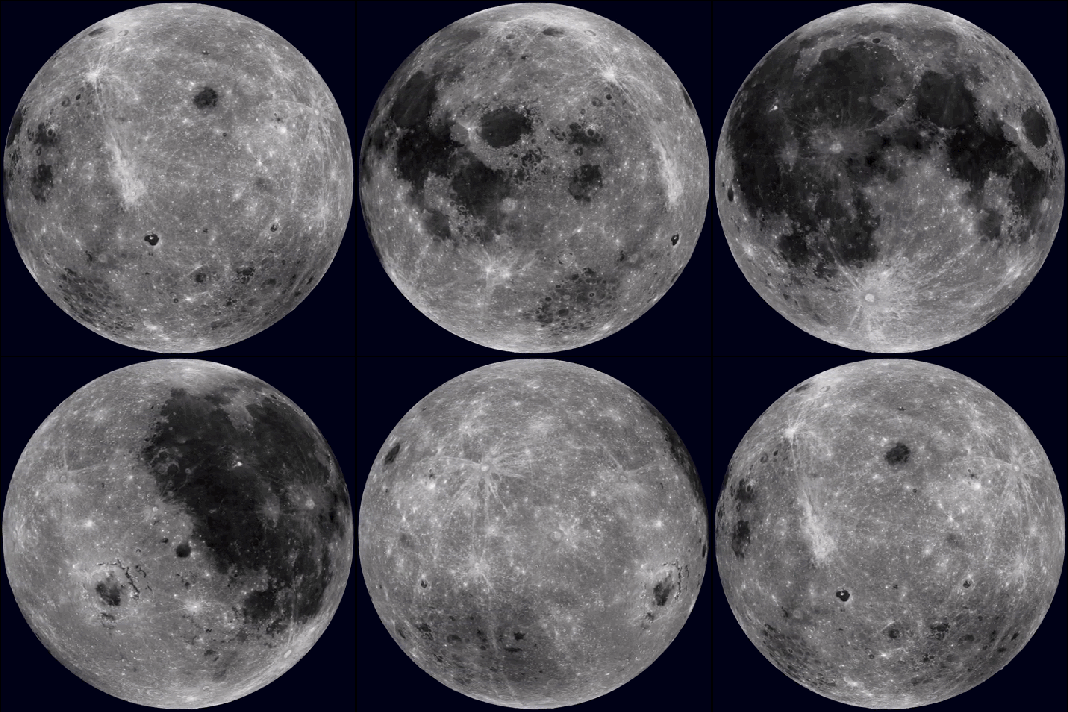
The regular daily and monthly rhythms of Earth's only natural satellite, the Moon, have guided timekeepers for thousands of years. Its influence on Earth's cycles, notably tides, has also been charted by many cultures in many ages.
The Moon for Kids.
Did you Know?.
NASA launched a mission to the Moon in 2009. Keep up with all the updates here!
Images of the Moon can be seen here.
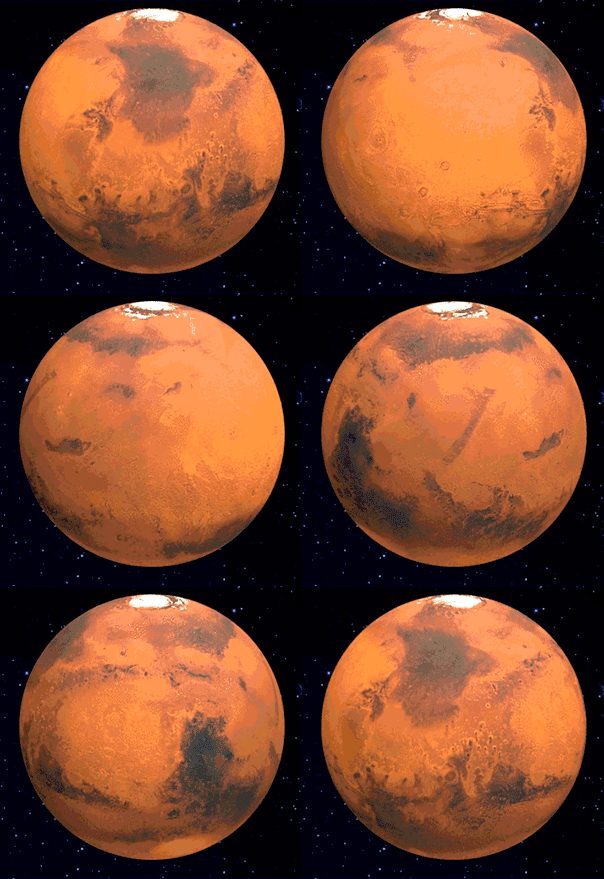
Mars inspires speculation like no other world in the solar system. Generations of Earth-bound dreamers have pondered its fiery glow and considered the possibility of life on the "Red Planet." Author H.G. Wells wrote of an attack by invading Martians, and Orson Welles scared unsuspecting Americans by bringing the story to radio.
Mars's surface features are visible to amateur astronomers. Check which side is facing Earth
NASA currently has several missions at Mars. Keep up with all the updates here!
Mars and its moons can be seen here.
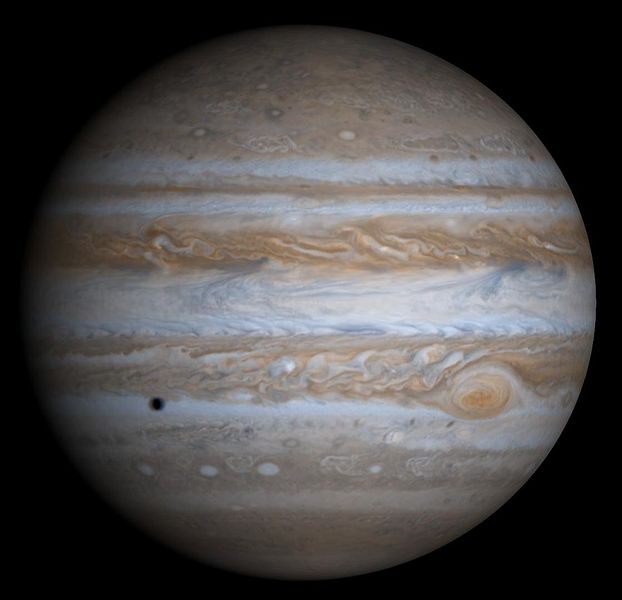
Weather systems on Earth blow themselves out in a few days or weeks. On the solar system's giant planets, though, weather systems can last for decades. The record holder is Jupiter's Great Red Spot, which was first observed no later than 1830 -- and perhaps a good bit earlier. This oval storm system is wide enough to swallow two Earths, and the winds at its perimeter blow several times faster than the strongest hurricane ever recorded on Earth.
Jupiter and its moons can be seen here.
With over 400 active volcanoes, Io is the most geologically active object in the Solar System
In 1955, Jupiter was discovered to be a strong source of radio emissions. Jovian radio emissions however were routinely converted into audio signals. Listening to Jupiter along with visually presenting these data can be a means of identifying the different types of Jovian radio bursts, distinguishing Jupiter from background noise and providing information about Jupiter's magnetic environment. Here are S-bursts caused when Io sweeps through Jupiter's magnetosphere.
Jupiter has 4 moons visible to amateur astronomers. Check their positions now...
NASA launched a new mission to Jupiter. Learn about it here!
The planet Saturn is a delicate giant. Although it is the second largest planet in the solar system, it's the least dense -- less dense than water. Chemical compounds in its upper atmosphere color its cloud bands in subtle shades of ivory, yellow, and tan. And broad, lacy rings encircle Saturn, making it the most beautiful planet in the solar system.
NASA currently has a mission to Saturn. Keep up with all the updates here!
Saturn and its moons can be seen here.
With ice geyers, Saturn's icy moon Enceladus is very interesting. Start an interactive here.
Liquid methane lakes, rocks made of ice water, and a balmy surface temperature of -290 degrees F, Saturn's moon Titan is quite bizzare. Launch your Titan explorer here.
Saturn is a source of intense radio emissions, which have been monitored by the Cassini spacecraft. The radio waves are closely related to the auroras near the poles of the planet. These auroras are similar to Earth's northern and southern lights. This is an audio file of Saturn's radio emissions.
Saturn has 5 moons visible to amateur astronomers. Check their positions now...
To the eye alone, Uranus is a dull planet. It looks like a featureless blue-green ball, with few of the dynamic cloud patterns that decorate Jupiter and Saturn. Yet Uranus may have the most interesting history of any planet in the solar system: A collision soon after its birth may have knocked the planet sideways.
Uranus and its moons can be seen here.
Uranus has moons visible to amateur astronomers. Check their positions now...
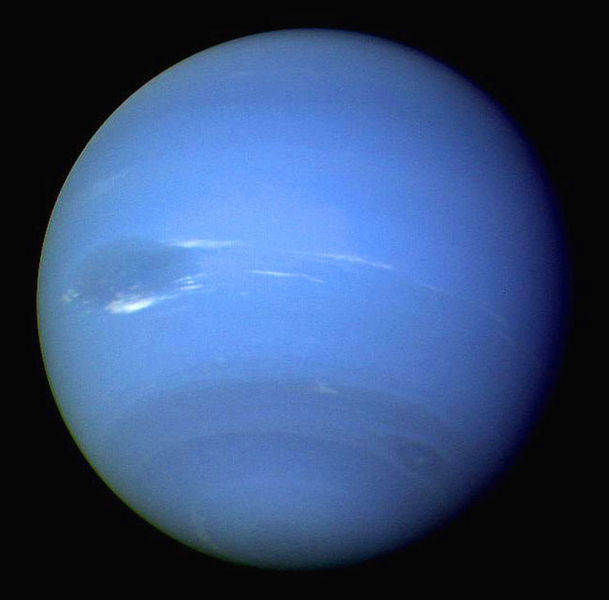
Neptune might be called the mathematicians' planet. German astronomer Johann Galle discovered it on September 23, 1846. The discovery was made possible, though, by the calculations of mathematicians Urbain Leverrier of France and John Couch Adams of England.
Did you know that much of we know about Uranus and Neptune came from the Voyager mission?
Neptune and its moons can be seen here.
Neptune's moon Triton visible to amateur astronomers.
After 76 years of glory, the small ball of rock and ice known as Pluto was relegated to the solar system backwaters in 2006 when astronomers dropped it from the list of planets. Instead, it's simply the most famous member of the Kuiper Belt, a broad doughnut-shaped ring of objects that extends outward from just inside the orbit of Neptune, the most distant planet.
New Horizons flew passed Pluto in July 2015. The probe is currently relaying its Pluto data back to Earth.
NEW !!
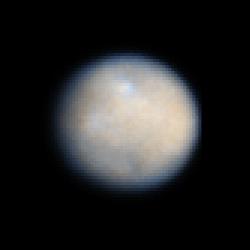
Best images of Ceres (left) and Vesta (right)
The asteroid belt between Mars and Jupiter is like the solar system's cluttered old attic. The dusty, forgotten objects there are relics from a time long ago, each asteroid with its own story to tell about the solar system's beginnings.To answer these questions, NASA launched a robotic probe named Dawn. Its mission: Fly to two giant asteroids, Ceres and Vesta, and explore them up close for the first time. Near Earth Objects (NEOs) present a danger to Earth. In 2001, NASA flew the NEAR spacecraft to 433 Eros, a near-Earth asteroid. Check out this encounter video We're eagerly awaiting the arrival of the DAWN spacecraft at Ceres in Febuary 2015. Did you know? Ceres was considered a planet when discovered in 1801. Only after several other "planets" were discovered in nearly the same orbit the term asteroid was invented. Comets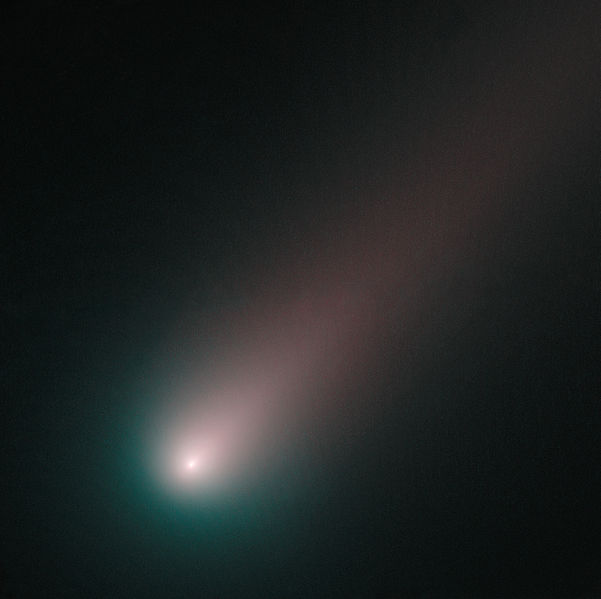
With the possible exception of Saturn's rings, comets are the most beautiful objects in the solar system. Their lacy tails can spread across millions of miles, giving them an ethereal quality that nothing else can match. NASA has launched and conducted serval great comet missions, check these out...
Did you know? Comets are either "dirty snowballs" or "icy mudballs". Other Cool LinksView the Hubble's fantastic images of solar system objects! Here is another GREAT site on our Solar System
The Solar System
KIDS!... Check out the games at Space Place Live!...... 
Want to see a satellite fly overhead in Alamogordo? See what's up in the sky at 
Where are the planets relative to one another? View the solar system at. Our Thanks! to the University of Texas and the McDonald Observatory. Listen to the podcasts of Stardate at: 
|